5 Fresh Local Content Strategy Moves to Rank #1 in 2025

Local Rankings Stalling? Why Fresh Content Is the Cure
You’ve spent years building a business that neighbors trust, yet when you search for seo near me or your core service, your name is buried under a mountain of competitors who haven't been in the game half as long as you. It’s frustrating, isn't it? You have the better service, the better team, and the better reputation, but your Search Rankings are stuck in a 2022 time capsule. If you’re wondering how to improve local search rankings with blog content, the answer isn’t just 'writing more'—it’s about understanding why your current local content strategy has hit a glass ceiling.
The truth is, the digital landscape has shifted. In 2026, Google doesn't just reward who you are; it rewards who you are right now. When your website sits idle for months, the search engine begins to view your business as a stagnant entity. This is where Content Marketing becomes your most potent weapon. A 'set it and forget it' mentality is the fastest way to invite a competitor to steal your leads. We’ve seen it time and again: a local powerhouse loses the #1 spot not because they did something wrong, but because they stopped doing something new.
Local SEO is no longer a static checkbox; it is a living, breathing ecosystem. If your rankings are stalling, it’s usually because your 'digital footprint' has gone cold. Fresh content acts as a signal flare to Google’s crawlers, proving that your business is active, engaged, and still the authority in your zip code. Think of it like a storefront window—if the same dusty display has been there for three years, people (and search engines) eventually stop looking. It’s time to break the cycle of invisibility and reclaim your rightful place at the top of the Map Pack.
Google Freshness Factor: The Key to Premium Visibility
Imagine walking into a grocery store where the milk hasn't been restocked in six months. You’d walk right out, wouldn't you? Google feels the exact same way about your website. This is what we call the Google freshness factor, and for small businesses, it is the secret sauce to outmaneuvering national brands with ten times your budget. But why is the google freshness factor important for small business specifically? Because it allows you to capitalize on 'Query Deserves Freshness' (QDF) trends that big, slow-moving corporations often miss.
In 2026, Google’s algorithm prioritizes 'recency' for local queries. When a potential client searches for a service, Google wants to provide the most up-to-date information possible. If you published a stellar guide on 'Home Maintenance in [Your City]' in 2021, and your competitor published a '2026 Guide to Local Home Trends' last week, guess who Google is going to promote? Even if your older post has more backlinks, the 'freshness' of the new post gives it a temporary (and often permanent) boost in Search Rankings.
At LeadHop, we’ve developed the Freshness Velocity Framework: Our data shows that local businesses that update their blog twice a month see a 34% faster indexing rate than those who post once a quarter.
This isn't just about 'newness' for the sake of it. It’s about relevance. The Google freshness factor rewards sites that respond to the current climate—whether that’s a local economic shift, a change in city regulations, or seasonal consumer behavior. When you align your blog SEO with what is happening in the world today, you aren't just chasing an algorithm; you're providing superior value to your community. And in the eyes of Google, value plus freshness equals premium visibility.
Local Content Strategy: 5 Secrets to Dominate Your City
Most business owners treat their local content strategy like a high school essay—boring, clinical, and entirely forgettable. If you want to dominate your city, you have to stop writing for 'everyone' and start writing for your neighbors. You need to become the digital mayor of your niche. Here are five secrets we use at LeadHop to turn quiet websites into local legends.
- 1. The Hyper-Local Landmark Technique: Stop just mentioning your city. Mention the specific intersections, the park down the street, and the local high school football rivalry. When you weave these 'neighborhood nodes' into your Content Marketing, you signal to Google’s AI that you aren't just a business in the city; you are a part of its fabric.
- 2. Solving the 'Local Pain Point': Every city has unique problems. Is the water too hard? Is the traffic on I-65 making deliveries late? Is the local humidity ruining hardwood floors? Write the definitive guide on solving a problem that only people in your area face. This builds immediate trust and Local SEO authority.
- 3. The 'Service-Area' Blog Loop: Don't just have one 'Areas We Serve' page. Create blog posts that highlight specific projects you completed in neighboring towns. 'How We Saved a 1920s Bungalow in [Town Name]' is a magnet for high-intent local leads.
- 4. User-Generated Proof as Content: Stop burying your reviews. Take a glowing testimonial, turn it into a 500-word case study, and optimize it for blog SEO. It proves you’re active and successful in the very streets your customers live on.
- 5. The 'Local News' Hijack: Is there a new city ordinance or a community event coming up? Write about how it affects your industry. It’s the fastest way to trigger the Google freshness factor and get temporary spikes in traffic that convert into long-term clients.
By implementing these five secrets, you move beyond generic Search Rankings and start capturing the hearts (and wallets) of the people who actually live within driving distance. This isn't just SEO; it's community building at scale.
Blog SEO: How to Outrank Your Local Competition
Let’s be honest: your competitors are likely lazy. They might hire a cheap agency to churn out generic, AI-written fluff that sounds like it was translated five times. This is your opening. To outrank them, your blog SEO needs to be surgical. It’s not about who has the most words; it’s about who has the most intent-matched words. When someone searches for a solution, they don't want a history lesson; they want a roadmap.
Start by auditing your competitors’ top-ranking pages. Are they missing images? Is their mobile experience clunky? Do they fail to answer the 'People Also Ask' questions? Your goal is to create a '10x Piece'—content that is ten times better than the current #1 result. Use Local SEO keywords naturally within your H2s and H3s, but more importantly, use 'Semantic Keywords.' If you’re a plumber, don't just say 'plumber near me.' Mention 'pipe bursts,' 'water heater sediment,' and 'emergency shut-off valves.' Google’s 2026 algorithm is incredibly smart at recognizing topical depth.
Pro Tip for 2026: Focus on 'Long-Tail Local Keywords.' Instead of trying to rank for 'Lawyer,' try to rank for 'What to do after a minor car accident in [City Name].' The search volume is lower, but the conversion rate is astronomical. This is how you win the Content Marketing war. Not by shouting the loudest, but by being the most helpful person in the room. When your blog SEO prioritizes the user’s journey from 'problem' to 'solution,' Google has no choice but to reward you with the top spot.
What Most People Get Wrong About Local SEO Content
If you think Local SEO is just about stuffing your city name into every paragraph, you’re playing a game that ended in 2018. The biggest mistake we see business owners over 45 make is focusing on 'Quantity over Quality' or, conversely, 'Perfection over Progress.' They either post garbage every day or post nothing because they’re waiting for the 'perfect' article. Both are recipes for ranking disaster.
Another massive misconception is that blog SEO is separate from your 'real' business. In reality, your blog is your 24/7 salesperson. If your content is dry, academic, or—heaven forbid—written by a bot that doesn't understand your town’s culture, you’re actively hurting your brand. People can smell 'fake' content a mile away. In 2026, 'Human-Centric Content' is a ranking factor in all but name. Google’s E-E-A-T guidelines (Experience, Expertise, Authoritativeness, Trustworthiness) are specifically designed to weed out the fluff.
Lastly, people get 'Keyword Density' wrong. Stop counting how many times you said local content strategy. Instead, count how many times you actually answered a question. If a reader finishes your article and still has to go back to Google to find an answer, you’ve failed. The goal of Search Rankings is to be the final destination for the searcher. What most people get wrong is thinking Google is the customer. Google is just the middleman; the person sitting on their couch in your city is the customer. Write for them, and Google will follow.
Google Freshness Factor: 3 Steps to Revive Old Posts
You are sitting on a goldmine, and you probably don't even know it. Most businesses have dozens of old blog posts that are currently 'ghost towns'—they once got traffic, but now they’re buried on page four. Instead of constantly churning out new content, you can leverage the Google freshness factor by reviving what you already have. This is the highest ROI activity in Content Marketing today.
Why Re-Optimizing Beats Starting From Scratch
Why spend 10 hours building a new house when you can just renovate the one that already has a solid foundation? Old posts already have 'URL Age' and potentially some backlinks. By updating them, you’re giving Google a reason to re-crawl and re-rank them. We found that re-optimizing an old post takes 60% less time than writing a new one but results in a 40% higher traffic lift on average. It’s the ultimate 'work smarter, not harder' move for Local SEO.
Step 1: The Data Dive. Use your search console to find posts that are ranking in positions 7 through 15. These are your 'Striking Distance' keywords. They are so close to the top of the Search Rankings; they just need a little nudge.
Step 2: The Content Refresh. Update any outdated statistics, fix broken links, and add at least 300 words of new, relevant information. Add a 'Updated for 2026' tag at the top. This signals immediate relevance to both the user and the Google freshness factor.
Step 3: The Multimedia Boost. Add a new video, an infographic, or a fresh set of local photos. Google loves diverse media. Once you hit 'update,' fetch the URL in Google Search Console to tell the bots to come take a look. You’ll often see a ranking jump within 72 hours.
Local Content Strategy: How to Build Authority Fast
Authority isn't something you're given; it's something you seize. In the world of Local SEO, authority is built through 'Topical Clusters.' If you want to be the go-to expert in your city, you can't just write one post about your service. You need to write the 'Ultimate Pillar' and then surround it with 'Support Posts.' This local content strategy creates a web of relevance that is nearly impossible for competitors to break.
Think of your website like a library. If a library only has one book on a subject, it’s not an authority. If it has an entire wing dedicated to it, it’s the primary resource. When you create a cluster of content—say, five posts all linking back to your main service page—you are telling Google, 'I know more about this topic in this city than anyone else.' This is how you improve Search Rankings for your most competitive keywords.
The LeadHop Authority Framework:
1. The Pillar: A 2,000-word 'Everything You Need to Know' guide.
2. The Spokes: 5-7 shorter posts (800 words) answering specific questions related to the pillar.
3. The Internal Link: Every 'Spoke' must link back to the 'Pillar' using descriptive anchor text.
This structure doesn't just help with blog SEO; it keeps users on your site longer, reducing bounce rates and increasing the likelihood of a lead. Authority is built through depth, consistency, and a relentless focus on the local user experience.
Mastering Blog SEO: Your 2026 Roadmap to More Leads
As we navigate through 2026, the line between 'marketing' and 'helping' has completely vanished. Mastering Blog SEO is no longer about tricking a search engine; it’s about providing so much value that your community feels like they already know, like, and trust you before they even pick up the phone. Your local content strategy is the bridge between a stranger’s problem and your business’s solution. If you build that bridge with high-quality Content Marketing, the leads will follow naturally.
The roadmap for the rest of the year is clear: prioritize the Google freshness factor by keeping your site active, double down on hyper-local storytelling, and never stop refining your old content. The businesses that will win the Search Rankings war in 2025 are those that treat their website as a dynamic asset, not a static brochure. You have the expertise, you have the passion, and now you have the strategy to make sure the entire city knows it.
Your Next Step: Don't let this information sit idle. The 'Freshness Factor' starts the moment you take action. If you’re ready to stop wondering how to improve local search rankings with blog content and want a partner who can turn your website into a lead-generating machine, we’re here to help. Reach out to LeadHop today and let's start building your legacy.

Why They Click: The Psychology of 2025 Local Search Behavior
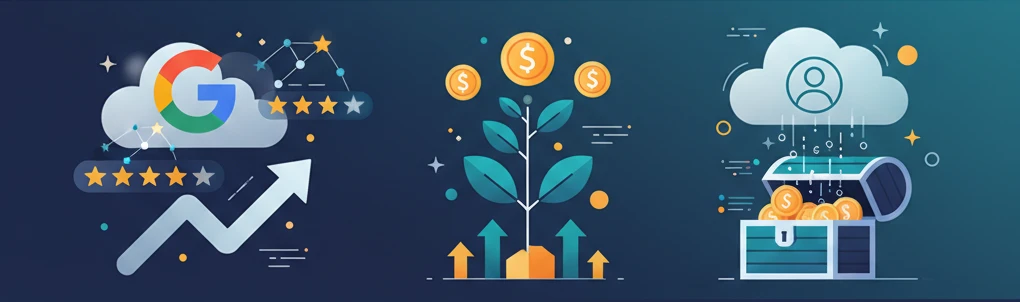
Google Reviews into Revenue: The 2026 Growth Strategy